Delivering Authentic Indian Basmati Rice to USA Buyers
- Inductus Global
- 3 days ago
- 5 min read

Introduction
The Basmati Rice Export From India to USA has emerged as a significant segment of the global agricultural trade industry. Renowned for its long grains, distinctive aroma, and exceptional cooking qualities, Indian Basmati rice enjoys strong demand among consumers, food distributors, wholesalers, and hospitality businesses across the United States. As international trade continues to expand, buyers increasingly seek reliable suppliers capable of delivering premium-quality rice while complying with global food safety and import standards. The growing popularity of Indian cuisine, multicultural consumer preferences, and demand for high-quality grains have further strengthened the market for Indian Basmati rice in the USA. This article explores the industry's market position, export performance, product categories, challenges, and future opportunities.
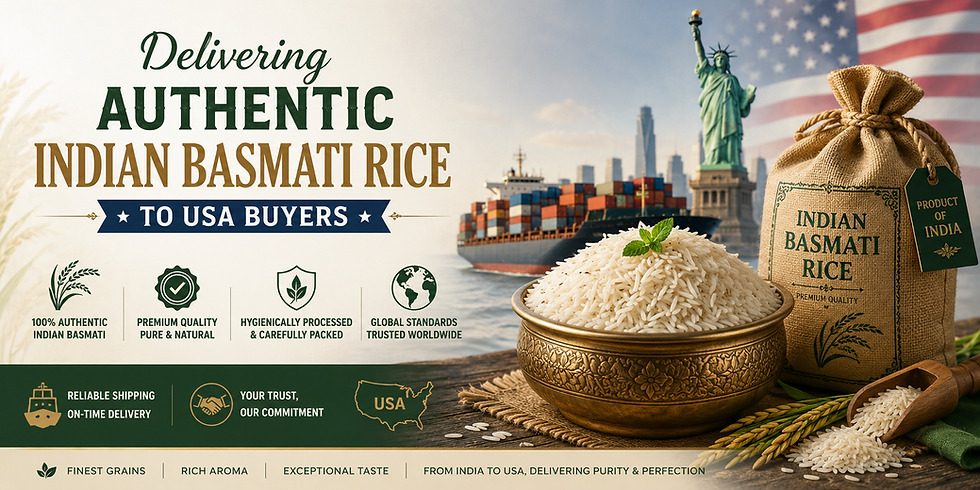
India’s Leadership in the Global Market for Basmati Rice Export From India to USA
India is widely recognized as the world's largest producer and exporter of Basmati rice. Favorable climatic conditions, fertile agricultural regions, and centuries of cultivation expertise have enabled the country to dominate the international Basmati rice market.
The Basmati Rice Export From India to USA plays a crucial role in meeting the growing demand from retailers, wholesalers, food manufacturers, and ethnic food distributors. Many rice exporters In USA depend on established Indian suppliers to ensure consistent quality and uninterrupted supply chains. Additionally, leading Basmati Rice Exporters In USA often collaborate with Indian producers to source premium-grade rice varieties that meet the expectations of American consumers and food service businesses.
Key Product Categories in Basmati Rice Export From India to USA
Indian exporters offer a diverse range of Basmati rice varieties tailored to different market requirements.
1.Traditional Basmati Rice
Traditional Basmati rice is known for its rich aroma, fluffy texture, and long grains. It remains highly popular among restaurants and specialty food retailers.
2.1121 Basmati Rice
1121 Basmati is one of the most sought-after varieties due to its extra-long grain length and superior cooking characteristics. It is widely exported to international markets, including the USA.
3.Pusa Basmati Rice
Pusa varieties offer excellent yield, aroma, and grain quality, making them a preferred choice for commercial buyers and distributors.
4.Organic Basmati Rice
The demand for organic food products continues to rise globally. Organic Basmati rice appeals to health-conscious consumers seeking sustainably produced agricultural products.
5.Steam and Parboiled Basmati Rice
These varieties are valued for their nutritional retention, longer shelf life, and versatility in food processing applications.
Export Performance and Statistics
The Indian Basmati rice export sector has shown consistent growth over the past several years. While figures vary annually due to market conditions, exchange rates, and trade policies, the industry continues to demonstrate strong performance.
Export Indicator | Estimated Value |
Annual Basmati Rice Export Volume | 5–6 Million Metric Tons |
Estimated Export Revenue | USD 5–7 Billion |
Share of Global Basmati Exports | Over 70% |
Key Export Markets | USA, UAE, Saudi Arabia, UK, Canada |
Average Annual Growth Rate | 6–10% |
Organic Basmati Growth Rate | 10–15% |
These figures highlight the growing importance of the Basmati Rice Export From India to USA within the broader international rice trade ecosystem.
Major Export Destinations Supporting Global Demand
1.United States
The USA remains one of the most important destinations for Indian Basmati rice. Increasing ethnic diversity, demand for premium grains, and expanding restaurant chains contribute to sustained market growth.
2.Middle East
Countries such as the UAE and Saudi Arabia represent major consumers of Indian Basmati rice due to strong cultural preferences and established trade relationships.
3.United Kingdom
The UK continues to be a significant importer, supported by a large South Asian population and growing appreciation for authentic Indian cuisine.
4.Canada and Europe
Demand across Canada and several European countries continues to rise as consumers seek premium rice varieties for home cooking and food service applications. Many rice exporters In USA maintain long-term sourcing relationships with Indian suppliers to serve these growing international markets efficiently.
Strengths of Basmati Rice Export From India to USA
1.Superior Product Quality
Indian Basmati rice is globally recognized for its unique aroma, elongated grains, and excellent cooking performance. These characteristics create a strong competitive advantage in international markets.
2.Competitive Pricing
India benefits from economies of scale, extensive cultivation areas, and efficient supply networks, allowing exporters to remain price competitive.
3.Skilled Agricultural Workforce
Generations of farming expertise contribute to consistent crop quality and adherence to international quality standards.
4.Advanced Processing Infrastructure
Modern milling facilities, quality testing laboratories, and export-oriented logistics networks support efficient operations throughout the supply chain.
5.Strong Export Ecosystem
Government support programs, export promotion initiatives, and trade facilitation measures continue to strengthen the industry's global competitiveness.
Challenges Facing the Industry
1.Regulatory Compliance
Exporters must comply with stringent food safety regulations, phytosanitary requirements, and labeling standards imposed by importing countries.
2.Price Volatility
Agricultural commodity prices can fluctuate due to weather conditions, production levels, currency movements, and global demand trends.
3.Increasing Competition
Other rice-producing nations continue to expand their export capabilities, creating competitive pressure in international markets.
4.Supply Chain Disruptions
Transportation delays, container shortages, and geopolitical developments can impact delivery schedules and costs.
5.Quality Consistency
Maintaining consistent quality across large export volumes remains essential for protecting brand reputation and customer confidence. For both Indian suppliers and Basmati Rice Exporters In USA, addressing these challenges requires strong quality management systems and efficient supply chain coordination.
Sustainability and Future Outlook for Basmati Rice Export From India to USA
Sustainability is becoming a key priority throughout the agricultural export sector. Buyers increasingly evaluate suppliers based on environmental, social, and governance practices.
1.Sustainable Farming Practices
Many producers are adopting water-efficient irrigation systems, integrated pest management techniques, and soil conservation practices to improve sustainability.
2.Growth of Organic Agriculture
Organic Basmati rice production continues to expand as demand increases among health-conscious consumers and environmentally aware buyers.
3.Technology Integration
Digital traceability systems, quality monitoring tools, and advanced supply chain management platforms are improving transparency and efficiency.
4.Expanding Market Opportunities
Growing consumer interest in premium grains, international cuisine, and healthy food products creates long-term opportunities for exporters serving global markets.
Industry analysts expect the Basmati Rice Export From India to USA segment to continue growing as demand for authentic and high-quality rice products increases.
Frequently Asked Questions (FAQs)
1.Why is Indian Basmati rice popular in the USA?
Indian Basmati rice is valued for its distinctive aroma, long grain structure, fluffy texture, and suitability for a wide range of culinary applications.
2.How do rice exporters In USA source Basmati rice?
Many rice exporters In USA partner directly with Indian mills, exporters, and sourcing companies to ensure consistent quality, competitive pricing, and reliable supply.
3.What certifications are important for Basmati rice exports?
Common certifications include ISO, HACCP, FSSAI compliance, organic certifications, and other food safety standards required by importing countries.
4.Who are the primary buyers of Indian Basmati rice?
Buyers include wholesalers, distributors, retailers, food service companies, restaurant chains, and Basmati Rice Exporters In USA serving regional markets.
5.Is demand for Basmati rice expected to grow?
Yes. Rising consumer awareness, increasing popularity of international cuisine, and demand for premium food products are expected to support future market growth.
Conclusion
The Basmati Rice Export From India to USA represents a vital component of the global agricultural trade landscape. India's unmatched expertise, premium product quality, competitive pricing, and strong export infrastructure position it as a leading supplier to international buyers. Despite challenges related to regulations, competition, and logistics, the industry continues to evolve through sustainability initiatives, technological advancements, and expanding market opportunities. As global demand for authentic and high-quality rice products grows, Indian Basmati rice is expected to maintain its strong presence in the USA and other key international markets.


Comments