Top Agricultural Products Supplier Trends Shaping Global Food Markets

Introduction
The global food supply chain is undergoing rapid transformation, and the role of an agricultural products supplier has never been more critical. From ensuring consistent quality to meeting international demand, suppliers are at the heart of connecting farmers, exporters, and global buyers. With rising population levels, evolving consumer preferences, and increasing trade complexities, agricultural supply chains are becoming more structured, technology-driven, and sustainability-focused. For exporters, importers, sourcing companies, and B2B buyers, understanding the latest trends in agricultural sourcing is essential to stay competitive. This article explores key developments shaping the industry and how businesses can align with emerging opportunities in global food markets.
India’s Position as a Leading Agricultural Products Supplier
India has established itself as a dominant agricultural products supplier in the global marketplace. With diverse agro-climatic zones and a strong farming ecosystem, the country produces a wide range of commodities, including cereals, pulses, fruits, and vegetables. India plays a crucial role in global food exports, especially in segments like basmati rice export from India, spices, and fresh produce. The country is also a major vegetables exporter, supplying onions, potatoes, tomatoes, and leafy greens to markets across Asia, the Middle East, and Europe. Government initiatives such as export incentives, improved logistics infrastructure, and digitized trade systems have further strengthened India's global positioning. As a result, international buyers increasingly rely on Indian suppliers for both bulk and specialty agricultural products.
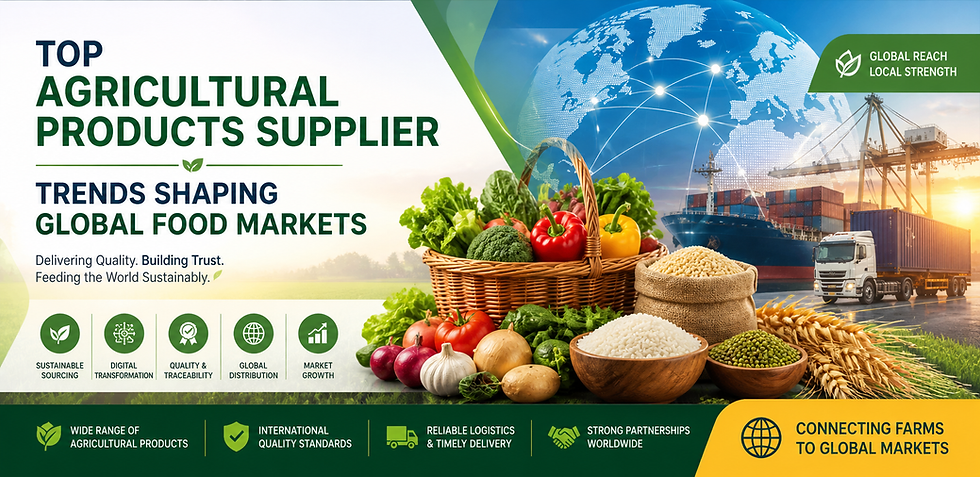
Key Trends in Agricultural Products Supplier Networks
1. Digital Transformation in Supply Chains
Modern agricultural products supplier networks are adopting digital tools like blockchain, AI, and IoT for better transparency and traceability. These technologies help buyers track product origin, quality, and logistics in real-time.
2. Rising Demand for Fresh Produce and Vegetables Exporter Networks
The demand for fresh and organic produce has surged globally. As a result, vegetables exporter networks are expanding rapidly, focusing on cold chain logistics and faster delivery systems to maintain product freshness.
3. Growth in Basmati Rice Export from India
India dominates the global aromatic rice market. The basmati rice export from India continues to grow due to increasing demand in regions like the Middle East, Europe, and North America. Quality certification and branding play a key role in this segment.
4. Shift Toward Sustainable Sourcing
Sustainability is becoming a top priority. Buyers prefer suppliers who follow eco-friendly farming practices, reduce carbon footprints, and comply with global environmental standards.
Key Product Categories in Agricultural Exports
An efficient agricultural products supplier typically deals with a diverse portfolio of products. Major categories include:
1.Cereals and Grains
Rice (especially basmati rice export from India)
Wheat
Maize
2.Fresh Fruits and Vegetables
Onions, potatoes, tomatoes (core vegetables exporter products)
Mangoes, bananas, grapes
3.Pulses and Legumes
Lentils
Chickpeas
Beans
4. Spices and Oilseeds
Turmeric, cumin, coriander
Mustard seeds, sesame seeds
Diversification helps suppliers mitigate risks and cater to different global markets efficiently.
Export Performance and Statistics
India’s agricultural export performance continues to show strong growth. Below is an estimated overview:
Category | Export Value (USD Billion) | Growth Rate (%) |
Basmati Rice | 5.5 | 12% |
Non-Basmati Rice | 6.0 | 10% |
Fruits & Vegetables | 3.8 | 8% |
Spices | 4.2 | 9% |
Pulses | 1.5 | 6% |
The steady rise in basmati rice export from India and fresh produce exports highlights the growing trust in Indian suppliers globally.
Major Export Destinations
A successful agricultural products supplier must understand global demand patterns. India exports agricultural products to over 100 countries, with key destinations including:
Middle East (UAE, Saudi Arabia, Qatar): High demand for rice, vegetables, and spices
Europe (UK, Germany, Netherlands): Preference for organic and certified produce
North America (USA, Canada): Strong market for premium basmati rice and processed foods
Asia (Bangladesh, China, Vietnam): Large-scale imports of grains and vegetables
The demand for reliable vegetables exporter networks is particularly strong in regions with limited agricultural production capacity.
Strengths of Indian Agricultural Exports
India’s dominance as an agricultural products supplier is driven by several advantages:
1. Cost Competitiveness
Lower labor and production costs allow Indian suppliers to offer competitive pricing.
2. Diverse Product Range
India’s varied climate supports year-round production of multiple crops.
3. Skilled Workforce
Experienced farmers and supply chain professionals ensure high-quality output.
4. Strong Export Infrastructure
Improved ports, cold storage facilities, and logistics systems support efficient exports, especially for perishable goods handled by vegetables exporter networks.
Industry Challenges for Agricultural Products Suppliers
Despite growth, the sector faces several challenges:
1.Regulatory Compliance
Exporters must meet strict international quality and safety standards, which can vary by country.
2.Price Volatility
Fluctuations in global commodity prices impact profitability for suppliers and buyers alike.
3.Supply Chain Disruptions
Weather conditions, geopolitical issues, and logistics delays can affect timely deliveries.
4.Global Competition
Countries like Vietnam, Thailand, and Brazil are strong competitors in rice, fruits, and other agricultural products. Addressing these challenges requires strategic planning, risk management, and continuous innovation.
Sustainability and Future Outlook
Sustainability is reshaping the future of the agricultural products supplier ecosystem. Key developments include:
Adoption of organic farming practices
Use of renewable energy in farming and logistics
Reduction of food waste through better storage and transportation
Implementation of fair trade and ethical sourcing standards
Looking ahead, the integration of technology, sustainability, and global trade partnerships will drive growth. The demand for basmati rice export from India and fresh produce through vegetables exporter channels is expected to increase significantly.
FAQs
1. What does an agricultural products supplier do?
An agricultural products supplier sources, processes, and exports farm products to international buyers, ensuring quality, compliance, and timely delivery.
2. Why is India a major agricultural exporter?
India’s diverse climate, large-scale production, and cost advantages make it a leading global supplier.
3. What products are commonly exported by a vegetables exporter?
Common exports include onions, potatoes, tomatoes, leafy greens, and seasonal vegetables.
4. Why is basmati rice export from India so popular?
Indian basmati rice is known for its aroma, long grains, and premium quality, making it highly востребed worldwide.
5. How can buyers choose the right supplier?
Buyers should evaluate certifications, product quality, pricing, logistics capabilities, and past export experience.
Conclusion
The global food industry is evolving rapidly, and the role of an agricultural products supplier is becoming increasingly strategic. From leveraging digital technologies to meeting sustainability goals, suppliers are adapting to new market demands and challenges. With strong growth in segments like basmati rice export from India and expanding vegetables exporter networks, India continues to play a vital role in global food security. For businesses involved in international trade, staying aligned with these trends is essential for long-term success.
Comments